
Saiful52 // Shutterstock
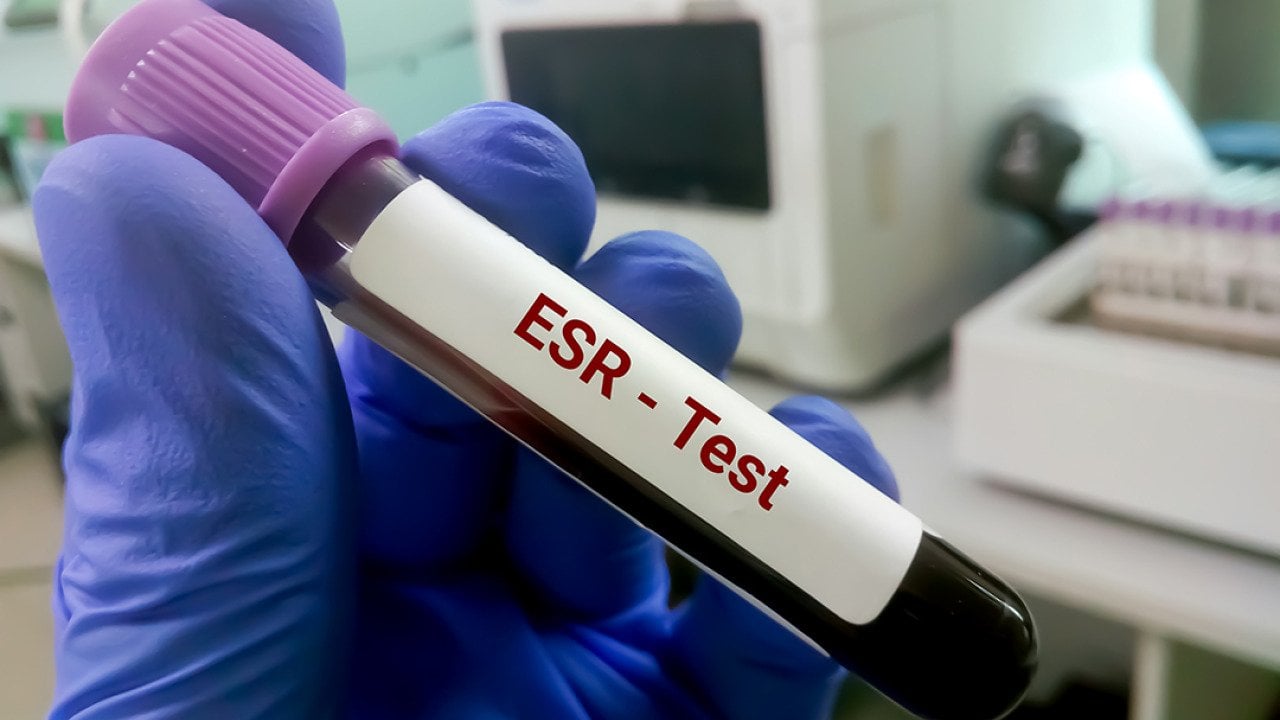
Study examines whether dropping ESR tests actually lowers costs
Efforts to reduce unnecessary medical testing have led some hospitals to scale back the use of a decades-old inflammation test known as the erythrocyte sedimentation rate, or ESR. But new research suggests that the decision may come with unexpected clinical and financial trade-offs.
A peer-reviewed study published in February 2026 in ClinicoEconomics and Outcomes Research, conducted by researchers working with diagnostic technology company ALCOR Scientific, examined the potential economic and diagnostic impact of using ESR testing alongside another common inflammation marker, C-reactive protein (CRP), when evaluating patients with inflammatory conditions.
The analysis found that combining ESR with CRP may reduce misdiagnoses and associated follow-up costs compared with ordering CRP alone.
For a representative 739-bed academic medical center in the United States, the model estimated potential annual savings of approximately $9.95 million tied to reduced downstream costs associated with diagnostic errors. Much of the projected savings was linked to avoiding additional diagnostic workups associated with false-positive CRP results.
What ESR and CRP tests measure
Both ESR and CRP are blood tests commonly used to detect inflammation in the body. Inflammation can signal a wide range of medical issues, including infections, autoimmune diseases, and certain cancers.
Clinicians often use these tests as part of a broader diagnostic process to help determine whether inflammation is present and how it may be changing over time.
The two tests measure different biological processes. CRP levels typically rise rapidly within hours of acute inflammation and return to normal within a few days. ESR levels tend to increase more gradually over 24-48 hours and may remain elevated longer.
Because of these differences, the study authors note that the tests may provide complementary information in certain clinical scenarios, including inflammatory conditions such as polymyalgia rheumatica, giant cell arteritis, lupus, and some malignancies.
“The kinetics of CRP and ESR are fundamentally different,” the researchers write.
Why Hospitals Started Cutting ESR Tests
In recent years, some health systems have reviewed ESR testing as part of broader efforts to reduce potentially unnecessary laboratory testing.
Initiatives such as the “Choosing Wisely” campaign encouraged hospitals and clinicians to evaluate tests that might provide overlapping information. Because CRP responds more quickly to acute inflammation, ESR has sometimes been viewed as redundant when both tests are ordered together.
At the time many of these recommendations were introduced, ESR testing was often performed manually and required more laboratory resources than today’s automated systems.
Today, ESR testing is typically automated in modern clinical laboratories. In the United States, the test is reimbursed at approximately $2.70, according to Centers for Medicare & Medicaid Services reimbursement data.
How the Study Modeled ESR and CRP Testing
The researchers used a decision-tree economic model to simulate cohorts of 100 patients evaluated from the perspective of the U.S. healthcare system payer.
The analysis examined eight conditions: rheumatoid arthritis, inflammatory bowel disease, periprosthetic joint infection, giant cell arteritis, pancreatitis, infection, autoimmune disorders, and cancer.
Sensitivity and specificity estimates were drawn from published clinical literature. Cost inputs were based on Centers for Medicare & Medicaid Services reimbursement rates (ESR: $2.70; CRP: $5.18). Follow-up costs associated with misdiagnoses were based on U.S. clinical guidelines and reviewed by clinicians.
The study also included scenario analyses that varied test costs, follow-up costs, and diagnostic performance assumptions.
What This Could Mean for Hospital Diagnostic Strategy
The researchers say the results highlight potential trade-offs health systems may face when evaluating laboratory testing strategies. In particular, the study found that ordering ESR alongside CRP — versus ordering CRP alone — could reduce misdiagnoses and the follow-up costs associated with diagnostic errors.
Efforts to reduce unnecessary testing remain a key part of value-based healthcare initiatives. At the same time, the analysis suggests that diagnostic accuracy and downstream healthcare utilization may also influence decisions about which tests are used in clinical practice.
For health systems evaluating their lab menus under value-based care frameworks, the relevant question may not be whether ESR costs too much, but whether its absence costs more.
This story was produced by ALCOR Scientific and reviewed and distributed by Stacker.

